
You Deserve to Feel Like Yourself Again
Postpartum Therapy
Specialized, compassionate therapy for postpartum anxiety, depression, rage, and the overwhelming transition into motherhood.
Request Your Free ConsultationYou imagined motherhood would be challenging, but not like this. Not the suffocating anxiety that grips your chest when you try to sleep. Not the rage that erupts over things that never would have bothered you before. Not the numbness that makes you wonder if you even love your baby — and the crushing guilt that follows that thought.
Everyone around you seems to be handling it. Your social media feed is full of glowing moms in matching outfits, baking muffins with their toddlers while their newborn naps peacefully. Meanwhile, you haven't showered in three days, you cried in the pantry, and you can't remember the last time you felt like a real person — not just a feeding, changing, soothing machine.
If this is you, please hear me: you are not broken. You are not a bad mother. You are a woman going through one of the most physically and emotionally demanding experiences a human being can have — and you deserve real, professional support.
I'm Vera McGrath, a Licensed Marriage and Family Therapist in Carlsbad, CA, and I specialize in helping postpartum moms like you. As an EMDRIA-certified EMDR therapist, I offer more than just someone to talk to — I offer evidence-based treatment that actually changes how your brain processes the overwhelm, the trauma, and the anxiety. Therapy with me is not about learning to cope better. It's about healing at the root so you can actually enjoy your life and your baby.
Does This Sound Familiar?
If you're experiencing any of these, you're not alone — and therapy can help.
“Asking for help isn't weakness. It's the bravest thing a mother can do. You don't have to white-knuckle through this.”
— Vera McGrath, LMFT

Understanding Postpartum Mental Health
Postpartum mental health conditions are far more common than most people realize. Up to 1 in 5 women experience a perinatal mood or anxiety disorder — and those are just the ones who report it. Many women suffer silently, convinced that they should be able to handle it on their own.
Postpartum depression isn't just “baby blues.” It's a persistent, heavy sadness that doesn't lift after the first few weeks. You may feel hopeless, worthless, or disconnected from your baby. Some women describe it as living behind glass — you can see your life happening, but you can't feel it.
Postpartum anxiety is actually more common than postpartum depression, yet it's less talked about. It shows up as constant worry, racing thoughts, difficulty sleeping (even when the baby sleeps), physical tension, and a feeling that something terrible is about to happen. You might obsessively check on your baby, feel panicked about leaving the house, or experience full-blown panic attacks.
Postpartum rage is the one nobody warns you about. Sudden, intense anger that seems to come from nowhere — snapping at your partner over dishes, feeling furious at the baby for crying, then immediately drowning in shame. This is a real, recognized postpartum condition, and it's treatable.
Postpartum OCD involves intrusive, unwanted thoughts — often about harm coming to your baby. These thoughts are terrifying, but they don't mean you're dangerous. They're a symptom of anxiety, not a reflection of who you are as a mother.
How I Help Postpartum Moms Heal
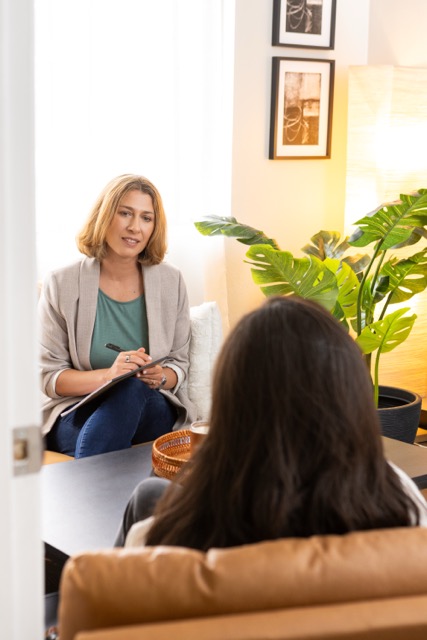
My approach to postpartum therapy goes beyond traditional talk therapy. While talking about your experience is important, I also use evidence-based modalities that work with your brain and body to create real, lasting change:
EMDR Therapy — If your birth was traumatic, if you can't stop replaying difficult moments, or if old wounds from your own childhood are surfacing now that you're a mother, EMDR can help. This therapy helps your brain reprocess traumatic memories so they no longer trigger intense emotional reactions. Many of my clients experience significant relief in just a few sessions.
Somatic Awareness — Postpartum stress lives in your body. The tension in your jaw, the knot in your stomach, the way your shoulders creep up to your ears — these are all signals. I'll help you tune into your body's language and release the stored stress and trauma that's keeping you stuck.
Attachment-Focused Work — Becoming a mother activates your own attachment system. If you had a complicated relationship with your own mother, or experienced neglect or inconsistency growing up, those patterns often surface in the postpartum period. We'll gently explore how your history is showing up in your mothering — and help you break cycles you don't want to repeat.
Practical Coping Strategies — Because sometimes you need tools for right now. I'll teach you grounding techniques, breathing exercises, and communication strategies you can use in the trenches of daily motherhood.
You've Been Strong Long Enough
Let me help carry some of the weight. Schedule your free consultation today and take the first step toward feeling like yourself again.
Request Your Free ConsultationWhat to Expect in Postpartum Therapy
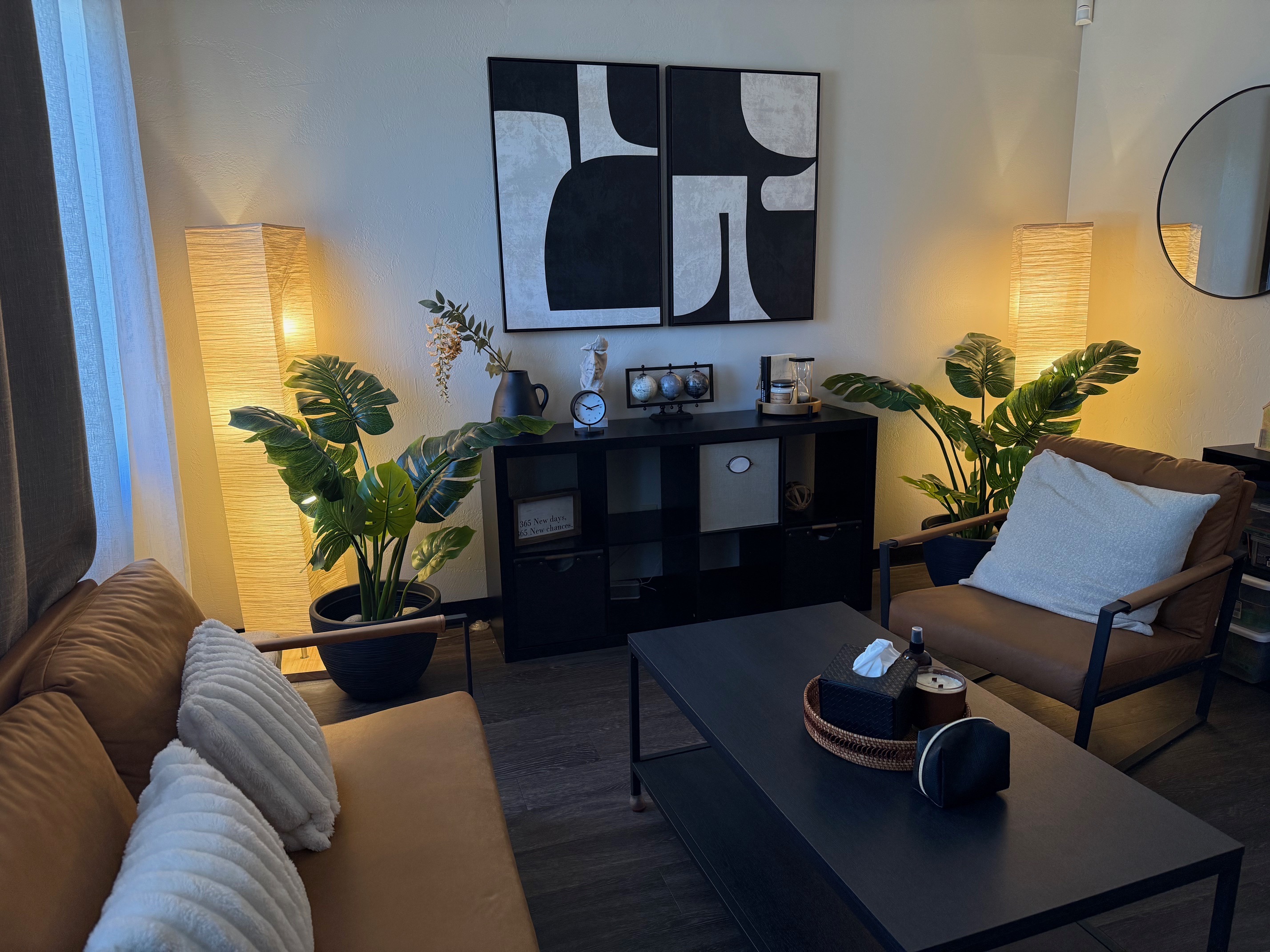
I know reaching out feels hard. Maybe you've never done therapy before. Maybe you're worried about being judged, or that someone will think you're a bad mother. I want you to know: my office is a judgment-free zone, and everything you share stays between us.
Your first session is about getting to know each other. You'll share your story — as much or as little as you're comfortable with — and I'll listen. Really listen. Then we'll create a plan together that fits your life, your schedule, and your goals.
Sessions are typically 50 minutes, and we'll meet weekly to start. As you begin to feel better, we can adjust the frequency. I offer both in-person sessions at my Carlsbad office and online therapy throughout California — because I know getting out the door with a baby can feel impossible some days.
Babies are welcome in sessions. Yes, really. If your baby is fussing, we keep going. If you need to nurse or bottle-feed, we keep going. If you need to bounce and sway the whole time, we keep going. Your baby is part of your world, and my office is set up to accommodate that.
Many of my postpartum clients start to feel a shift within the first few sessions. Not because healing happens overnight, but because there is something profoundly powerful about finally being heard — about saying the scary things out loud and having someone respond with compassion instead of judgment.
When Should You Seek Postpartum Therapy?
There is no “right time” to start therapy. Some women come to me during pregnancy because they're already feeling anxious. Others come when their baby is 3 months old, or 6 months, or 2 years. Postpartum mental health issues don't have an expiration date — and neither does your right to get help.
You don't need to be in crisis to benefit from therapy. If something feels off — if motherhood doesn't feel the way you thought it would, if you're having a harder time than you expected, if your relationships are suffering — that's enough of a reason to reach out.
That said, if you're experiencing thoughts of harming yourself or your baby, please reach out now. You can call the Postpartum Support International Helpline at 1-800-944-4773 or text “HELP” to 988. You are not alone, and there is help available right now.
Benefits of Therapy
Frequently Asked Questions
You Don't Have to Do This Alone
Take the first step toward healing. Schedule your free consultation today and discover how therapy can help you feel like yourself again.
Request Your Free Consultation